
Working With The Ancestors — Part Two
. . . when your ancestors were awful, or mostly unknown

“All happy families are alike; each unhappy family is unhappy in its own way” —From Anna Karenina, Leo Tolstoy
Happiness is relative; it comes and goes. There is no family that is without its difficulties, whether kept behind closed doors or flown in the front yard like a big freak flag for all to see, none of us escapes family dysfunction and we all carry trauma to some degree. If perfection were a requirement of seeking a relationship with your ancestors, very few, (if any) of us would be connecting to our departed kin.
So, what if we skip ancestor veneration all together? Are we doing witchcraft wrong? Are we not as good at the craft as those who work with their ancestors? Certainly not. Witchcraft isn’t competition; every witch decides how their practice works best for them. If honoring or connecting with those who have gone before you is not your thing, you’ll be just fine without it.
Okay, then what’s the big deal about ancestor work?
I’ve always turned to the words of the author, Linda Hogan — “I am listening to a deeper way. Suddenly all my ancestors are behind me. Be still, they say. Watch and listen. You are the result of the love of thousands.”
There is something healing in that sentiment, acknowledging that you are here because of the many generations that came before you, generations that yearned to create life and legacy. As the popular saying goes, You are your ancestor’s wildest dream.
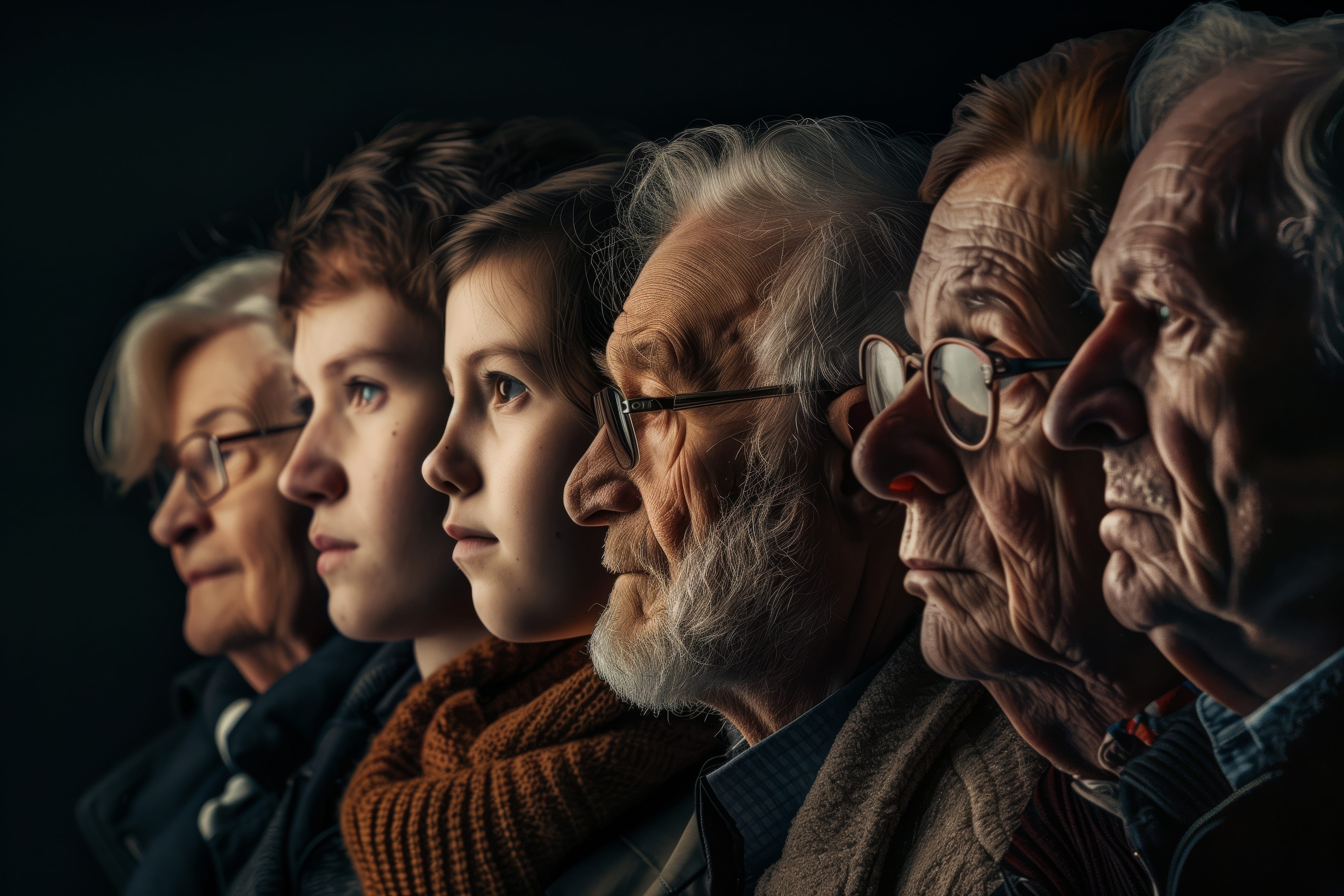
If you have been fortunate enough in this life to have the loving support of your parents and grandparents, or at least some parental figure, you know how empowering that can be. Think of being raised up on the shoulders of generations of your ancestors, all of them invested in your wellbeing and success—how empowering is that?
And if your ancestors were terrible, well honestly, whose weren’t? I’m always a bit amused by people who skip over their immediate ancestors to honor the ancients they have no direct knowledge of. Talk about troublesome barbarians—opportunism and brutality were requirements just to survive.
Look, you can set boundaries with any of your family that cause harm and death doesn’t change that. On the other hand, you might consider working on broken relationships even after death. The choice is entirely yours.
“We are each links in the chain. I am only one link, and I know I have caused pain and suffering, whether intentionally or not. How can I possibly expect my children, my grandchildren, and great-grandchildren yet to be, to forgive my transgressions if I cannot forgive those of my ancestors?”
Read more: Healing Your Ancestors ~ The Agora
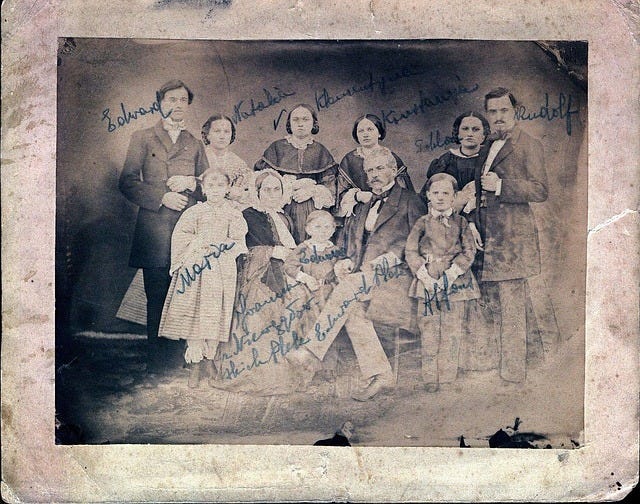
We all have plenty of related ancestors to work with and it’s not like we’re going to call hundreds of them forth as an army. Choose one or two by name. Once you have the hang of it and you’re feeling brave, you might call in any distant or unknown ancestor that desires a relationship.
Chosen Family
Aside from bloodline, most of us have people that are like family to us, those who are there for us unconditionally, and we for them. We can select ancestors to work with in the same way, whether we knew them in life, or know them through history or mythology. Establish these relationships in the same way you do with gods, goddesses, saints, angles or ascended masters. Invoke their spirit and invite them to connect with you. Of course, you can’t force an ancestor relationship. It may or may not be a match—just like in life (you might notice I keep saying that).
You can appeal to historical figures of your known heritage, ancestors of your land (genius loci), or just somebody whose life and deeds you admired. As far as I’m concerned the whole What Would Jesus Do? movement is a form of ancestor work.
Getting Started
The very first time I appealed to my ancestors, I wan’t even sure what I was doing or how to do it. An important heirloom that had been passed down through my maternal line had been lost to our family through carelessness—loaned to a friend, then languishing in storage, and then sold in a rummage sale. As devastated as I was, I knew if my mother was still with the living she would be utterly heartbroken.
Like I said, I had no idea what I was doing, but I put a photo of my mother, grandmother, great and great, great grandmother on my altar, along with my grandmother’s rosary and a piece of my mother’s jewelry. I lit a candle and made my appeal to the mothers of my bloodline.
It’s a long story, but after having a very vivid dream in which my mother gave me a cyptic message, I followed my instincts along with some clues, and within a few weeks time the item was located and recovered.
To let me know that it was truly her, and that she could see beyong the grave, my mother showed me a horse in the dream (something that had no connection nor meaning in our family). It turned out that the person who bought our heirloom at a rummage sale just happened to own a horse ranch.
My story is one example of the tangible benefit of working with ancestors, but asking our departed for help shouldn’t be the only relationship we cultivate with them—I believe the ancestors desire something deeper.
What Is Remembered Lives
The simplest way to connect with your ancestors is to call them to mind.
After my brother passed when I was still a teenager, I missed him terribly and dreamed of him frequently. As Samhain drew near this year, I realized he hasn’t been in my dreams for years—decades, possibly. I wondered aloud to a friend why that might be, why he didn’t want to visit anymore. Then just last night, there he was with a clear message for me about love and remembrance.
I believe our ancestors miss us as much as we miss them, and just as Linda Hogan wrote, they are all around us, waiting for us to invite them to connect. I think they desire a meaningful place in our lives, to feel remembered and loved—not just at Samhain, but all year.
You can invite ancestors to come forward by creating an altar or shrine with meaningful items and offerings, writing them letters, or using meditation and prayer to open a channel for communication. Other methods include calling their names, asking them to appear in dreams, or using music and stories to honor them and foster a connection.
When You’re Ready To Work With Your Ancestors
Ask yourself why you want to make the connection, what you expect from the relationship, and what you’ll give.
Start slow, inviting one or two departed kin you knew in lifeto come forward.
Call them to mind often, remembering the energy you shared in life.
Set aside a time to talk to them. Think of it as a long distance phone call, sharing news, asking advice, etc. (you can do this in thought). Imagine what their responses would be. Soon, you might be surprised by answers that seem to come from outside of yourself.
Do the things you enjoyed doing together and invite them along. Again, you might be surprised by some sign that they are with you.
When ancestors come to you in dreams or meditation, they often communicate in symbols or metaphores. Keep a diary or journal to see patterns and clues to meaning.
Don’t ignore your ancestors eleven months of the year and then expect some grand revelations at Samhain. Likewise, don’t obsess over relationships with your dead kin, letting this work overwhelm you—and them.
Remember that you can set boundaries if any departed ancestor becomes troublesome.
In part three of this series, I’ll share a Samhain ritual to reach out to your ancestors. Subcribe now to automatically receive posts by email.
Until next time ~
Blessed Be and Journey Well


This hit hard. The dead don’t want worship, they want witness. Light a candle, pour a drink, tell the story. They’ll show up.
That's beautifully written! I really enjoy working with my ancestors and set up an altar for them. Since I did that, the room has such an enbracing atmosphere.